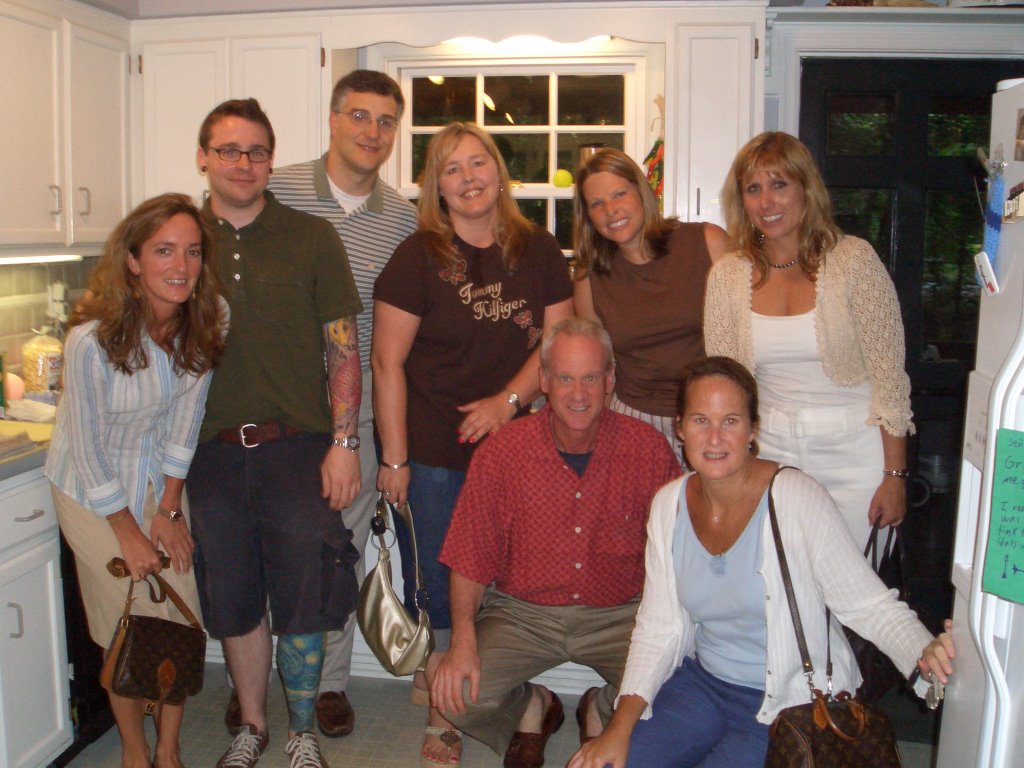
Thursday, August 31, 2006


Sometimes we all need a drink

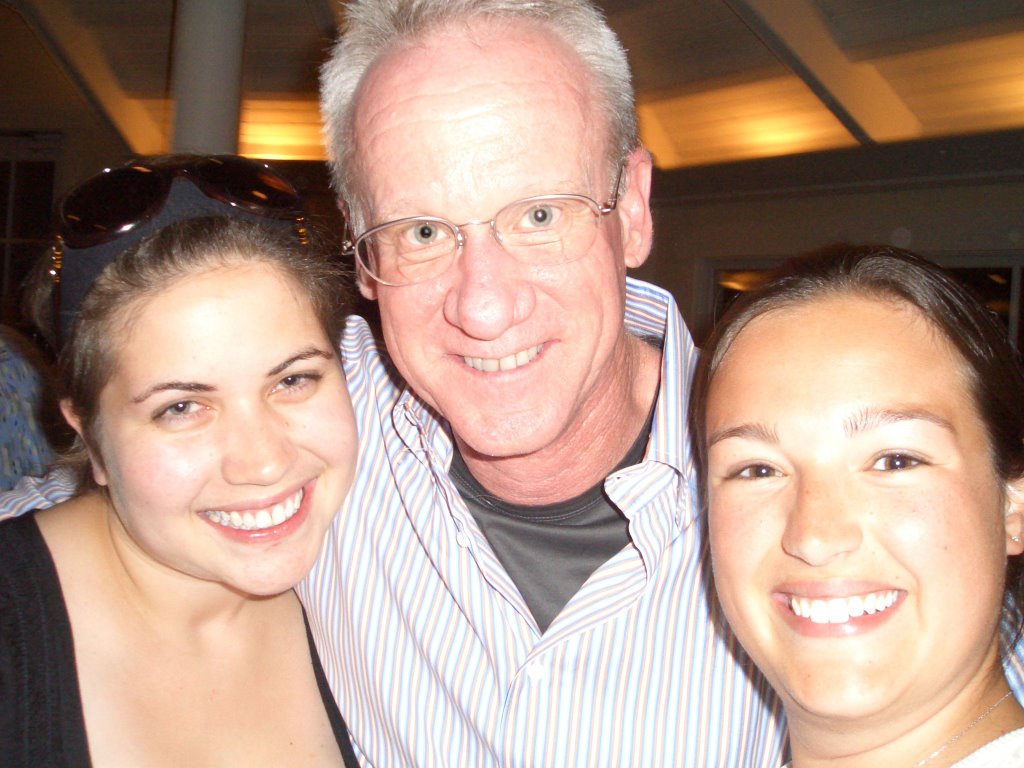
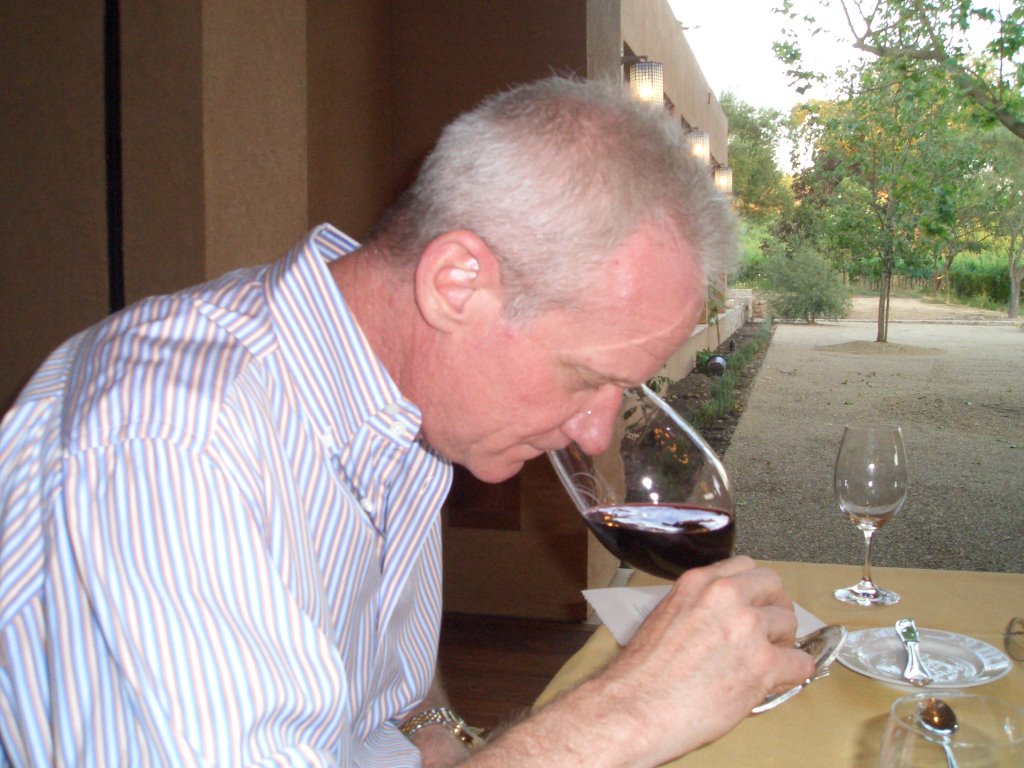
Your Mayor tastes wine at Fleming's with Ti Miller. Ti heads up the staff of hostesses who make the Fleming's experience start off with style.

Meritage Wines and Pronunciation

When we see proprietary names on wine bottles, name like Insignia from Joseph Phelps or Opus One from the formidable duo of Mondavi and Rothschild, these names are chosen many times because they lack the required percentage of any one grape which would allow them to be called by the varietal name. A special group of these wines choose to emulate the blends of grapes made popular in Bordeaux. If they comply with certain standards, they may carry the name Meritage. The Meritage Association sets these standards. The wines must be a blend of two or more Bordeaux varietals, be the winery’s best wine of it’s type, be made by a US winery from AOC grapes and limit production to less than 25000 cases. The word Meritage was selected in a contest of 6000 entries in 1989, and combines the words "merit” and “heritage”. So the frenchified pronunciation Meritahj is incorrectly applied and the actual pronunciation rhymes with the word of it’s origin, heritage. Think there are only five varietals in Bordeaux?
Allowed grapes include Cab Sauv, Malbec, Merlot, Cab Franc, Gros Verdot, Petite Verdot, Carmenere, and St. Macaire for reds, and Semillon, Sauv Blanc and Muscadelle for whites. Yep there are White Meritages!

Monday, August 21, 2006

The Not So Great Sulfite Debate

Got a question from a friend in a bar last week asking for my input on sulfites in wine. Because of a law in the US, wines with 10 mg/L of sulfites must be labeled as “contains sulfites”. This has led many to believe that sulfites are not in old world wines. The fact is that sulfites, a resultant salt from the addition of sulfur dioxide, is used by most wineries/vineyards worldwide. European wines contain an average of 80mg/L, about the same as found in US wines. In the vineyard, sulfur helps prevent rot and fungus. After the crush, sulfur protects against bacteria, and slows oxidation. Organic wines have no sulfur added, but these still represent a small amount of worldwide production.
Sources differ as to the effects on humans of the sulfites in wines. Some claim allergies to the sulfite gives them headaches. Other sources believe that while there indeed may be chemicals in red wine that can cause headache, sulfites ain’t it. If you believe that sulfites cause you problems, take a simple test. Dried apricots contain high levels of sulfites, much higher than in wine. If you are a “sulfite sufferer’, but get no headache from these, I recommend you eat more frequently when you drink wines, and moderate consumption. If the apricots give you the same symptoms, (and one source says you will be the first they have ever heard of), then perhaps sulfites do indeed cause you problems. Want to eliminate the sulfites in wine? Apparently, the addition of hydrogen peroxide to wine will eliminate the sulfites. This link leads you to studies which go into detail on that, as well as debunks many sulfite myths. As for me, well, chemistry discussion itself gives me a headache. Moderation in everything, including moderation!

Wednesday, August 16, 2006

Humble Mayoral Beginnings

I recently received from Fleming’s Corporate offices a request for interview for their newsletter. One of the questions they are asking me is where the nickname “Da Mayor” came from. As I thought back on the time I’ve spent at Fleming’s, my time as your Mayor seems both fleeting and forever. Wowed by the “100 wines by the glass”, I changed my allegiances for 4 night a week barfly from a local Italian haunt to Fleming’s when they opened almost three years ago. Immediately hitting it off with the bartenders and management (it’s amazing how friendly people get when you reach a certain amount in annual consumption in one place), I started holding forth at the bar, as a sort of upscale Cliff Clavin, doing blind tastings and generally enjoying myself and learning all I could about wine. The ambiance of the bar is such that it attracted an upscale crowd who were interested in learning about wine, so I seemed to naturally move among them asking what they liked, recommending new things, and becoming a mainstay. Folks began to call me the Godfather, because every time I walked in, all the staff and patrons would feign reverence to me. I was thrilled when finally a friend blurted out “You must be the Mayor of this place!” and the nickname was born. Fortunately, I didn’t seem to chase the patrons away, so our Operating Partner, John van Peppin, encouraged me to continue. We started the now famous Monday Night tastings, and that was followed by the Newsletter and the Wine Blog. I am fortunate to have become Da Mayor of Fleming’s. It has made me many new friends, taught me about wines from a “people down” view, and rekindled my writing bug from years past. You have all been a key part to my ride. Thanks for coming along, and I hope to see you soon tasting great food and wines.

Hot Time; Summer in the City

It’s summer in Richmond, and the thought of a big fat Cabernet is, well, not exactly appetizing right now is it? One of the things I have espoused on these pages is how good white wines taste in the summertime, and how hard it is to get red wine drinkers to come over to the “light” side. Even if you try lighter style reds, the temperature outside seems to overpower “room temperature” wines inside. If you are not amenable to trying whites, there are a few chilling ideas to help you get through the summer time. Merlot and Cabernet do lose something when served too cold, but try chilling your Syrah/Shiraz or Grenache based wines. Most of these lose much less flavor on the chilling, and as we handle the wine glass, it warms back to a temperature that releases any missing flavors. You can, dare I say it, even put ice in your wine for a quick chill. Come on, don’t giggle. Your wine is about 85% water right now. A little more won’t ruin it! You scotch drinkers know that a “wee dram” of water added to your glass of Glenmorangie actually brings out nuanced characters in the whisky.
While we are on the subject, ice and wine have one more interesting use. Have a half bottle of something wonderful left but you are leaving on vacation? Pour the remains into a plastic baggie, carefully squeeze out the air and pop it into the freezer. You will do it no damage, and on thawing two weeks later you will have had none of the oxidation that can occur with even Vacu Sealed wines. Heck, you can even thaw it in the microwave with no ill effect!

Friday, August 04, 2006

Of Brick Walls And Mondays

This Monday marks another first Monday at Fleming's so I hope my worthy readership will come out and join us for yet another tasting of three wines and some great food. Blogging is a little bit like talking to a brick wall, you never really know if anyone is listening. So perhaps show that you are by coming out to see us this week.
There are so many people I know moving to NY this summer! I have 5 friends all headed to the big apple in the next month or so. My loss and their gain, but most will stay in touch and not make the "Brick Wall" syndrome continue. Once you get tired of talking to the wall, it's pretty easy to stop.

Saturday, July 15, 2006

Scotland in my Blood, or maybe it's Scotch


Home from Scotland, was wonderful trip. St. Andrews golf, Skibo Castle and some of the nicest people you ever saw.

Thursday, June 29, 2006

Home to Roost With Chianti Classico


When I pass the Italian section in the wine store I always look for the Black Rooster adorning the Chianti Classico bottles, and grin at the small things that some regions do to make their wines recognizable. Chateauneuf-du-Papes raises a shield on the glass of the bottle, to protect from someone trying to sell lesser wines as the real McCoy. You may recall that Chianti is the Tuscan region in Italy near Florence. It is divided into seven sub-zones, of which Classico is the largest, and generally considered of better quality than the others. Sangiovese is the predominant grape, and medium bodied, food friendly wines are the style. The legend of the Black Rooster (or Gallo Nero) comes from an old fable of how the cities of Florence and Sienna resolved a border dispute:
In a bid to put an end to their interminable wars, the two Tuscan cities decided to entrust the determination of their common border to an extraordinary contest involving a horseman from each community. Each horseman would set out from his city the moment a rooster crowed to announce the rising of the sun. The border between the two republics would be drawn at the point where the two riders met. The Sienese selected as their feathered "alarm clock" a white rooster that had been generously fed and coddled and had become plump and satiated because of its excessive diet. The Florentines picked a black rooster, which had been fed little and was always hungry. On the day of the contest, it crowed long before the sun rose so that Florence's champion took to the road before dawn. Only when he reached Fonterutoli, about 10 miles from Siena, did he encounter the Sienese rider. It is for that reason that nearly all of the Chianti Classico zone passed under the jurisdiction of the Florentine Republic.
True? Who knows. But I think I’ll have some Pasta.

Tuesday, June 20, 2006

Saturday's Organic Lesson

When someone says organic to me I think two things: expensive and bug ridden. Saturday morning we met up with Michael Honig at the Honig Winery and began a lesson in Organic Winemaking. Apparently, the use of organic methods (ie. no chemicals or synthetic fertilizers) allows the earth to, over time, build nutrients that stay in the soil, not leaching out with watering or rain. Think of synthetic fertilization as being like giving your kid a coke and a moonpie: there is a fast buzz of activity, but the long term outcome is crash and burn, requiring more artificial stimulus. By plowing organic matter back into the soil, the grapes actually ripen and mature earlier. Rather than having to wait for the grape to gain taste by longevity, the organic grower can harvest earlier, before all the sugars have been created in the grape. There are three "benefits" of this, depending on your point of view. First, the grape fully matures and can be picked while other producers wait for their grapes, making it easier to access pickers and other farm workers. Second, the final blend ends up with a lower alcohol because of lower harvest Brix, or sugar content. Organic wines are on average one to one-and-a half per cent lower in final alcohol content than their competition. As we pillage the earth of more and more of it's natural nutrients, it requires longer maturation to get flavor, and we end up with the high alcohol, hot wines that are on the market today. Finally, pesticides and inorganics cost more, so we actually save money in the long term production.
Encouraging natural insect and rodent enemies, like owls and bluebirds, is one of the organic methods employed by Honig. This day we were allowed to view the "banding" of one of the local owls by a local professional naturist from a group called Habitat for Hooters. She places nesting area at various intervals in the vineyard, depending on the amount of rodent activity, and tracks the growth of the local owl population. By encouraging flock movement, she has moved owls farther north into Napa than they typically have gone, protecting more vineyards and reducing the need for rodent poisons. The bands allow her to track movement and calculate survival rates of new chicks.
Next door at Frog's Leap Winery (Ribbit), we learned from slightly off-beat owner John Williams (brother of VERY off-beat comedian Robin Williams) about biodynamic growing. Taking organics to the next step, biodynamics requires you to use only those organic properties available on your own property. Keeping everything that you grow, seeds, stems, prunings etc., keep costs even lower, and remove your reliance on outside sources of organics, leaving them where they are intended.
Interestingly, neither of these wineries market their wines as organic. The stigma attached to the organic movement and the quality of their wines have driven them to market their quality, and let the taste speak for itself.

Monday, June 19, 2006

What Did You Do The Night You Turned 21?


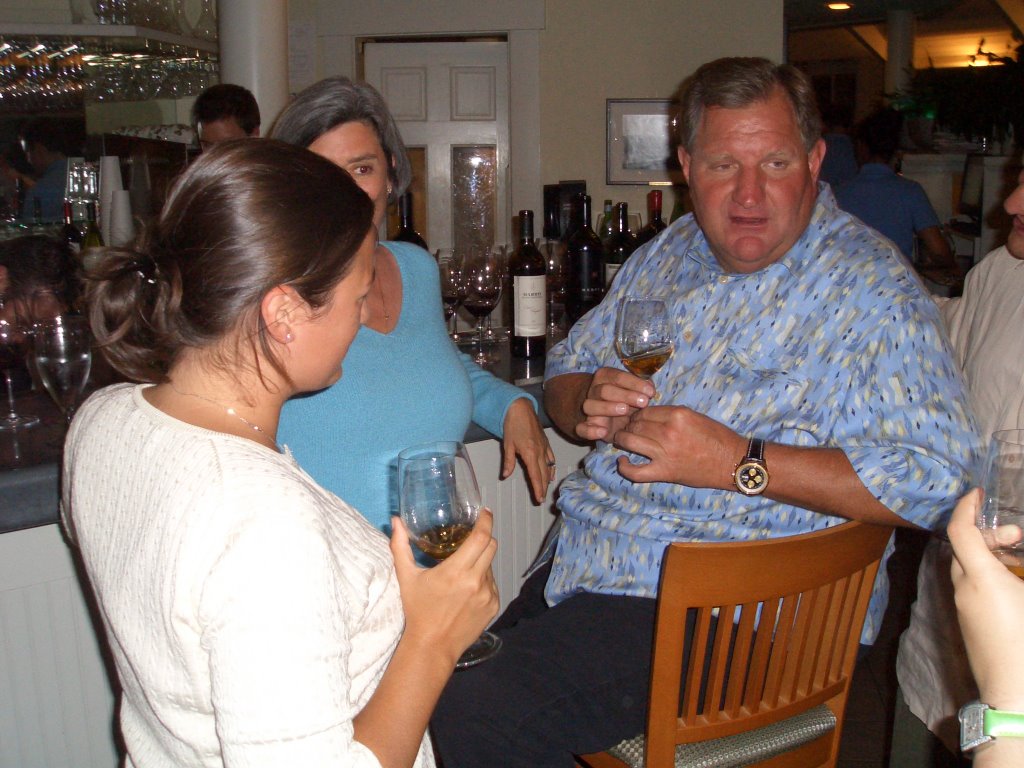
After our dinner at Quintessa, not to mention our long day of tasting and eating, our busses dropped us off at our resort and a few of us headed up to the bar for a night cap. Our group as a whole was varied and humorous, and this night one larger than life Texan (Ralph, Bottom) accompanied us into the Sommelier's Den to select our late evening's fare. He was as loud and boisterous as he was generous, and as we looked through the Reserve List, he chose some of the great rock crushers of Napa. I, meanwhile, struck a conversation with two young ladies celebrating their 21st birthdays with their mothers by visiting Napa to learn about wine. Always a sucker for educating neophytes on my passion for wine, we began tasting the wines that "the Big Guy" sent our way. Starting with three wines from winemaker Mark Herold, we began our foray: 2003 Bucella Cab (95 RP), 2003 Harris Estate Trevas Vineyard Cab, and 2003 Merus Cab (94 RP). This horizontal was merely a jumping off point for the ladies as they learned the intricacies of See, Swirl, Smell, Sip, and Savor. Their mothers watched as the eager learners began to open the door to fine tasting. We did not stop there. As Ralph got more interested in the list, we rolled out a 1999 Grace Cabernet, 1987 Phelps Eisele Vineyard Cab, and Oh I almost forgot... a 2002 Screaming Eagle (99 RP). For those of you unfamiliar, Screaming Eagle is arguably one of Napa's top cult wines, pricing out around one thousand bucks a bottle, and certainly nothing that I had ever had before. For the record, you could blind taste me today, and I could not tell the Screaming Eagle from any of the rest, but I had been drinking great wines for about 16 hours at that point. But, as the man says: "We do it for the stories we can tell". I do recall loving it, and I also know the girls knew by the end how much different that quality wines taste. So picture your 21st birthday, who you were with, and what you were drinking, and imagine the stories that Alex and Emily will be telling to their friends and children about the night they met "The Big Guy" and Da Mayor.

Friday's Photos


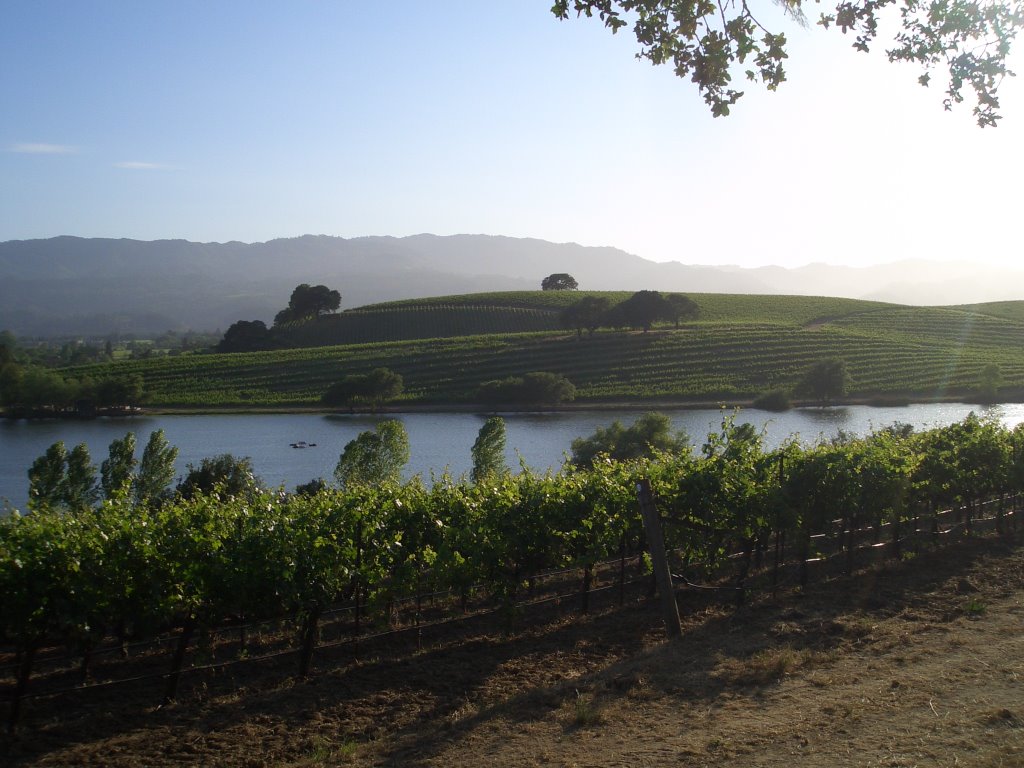
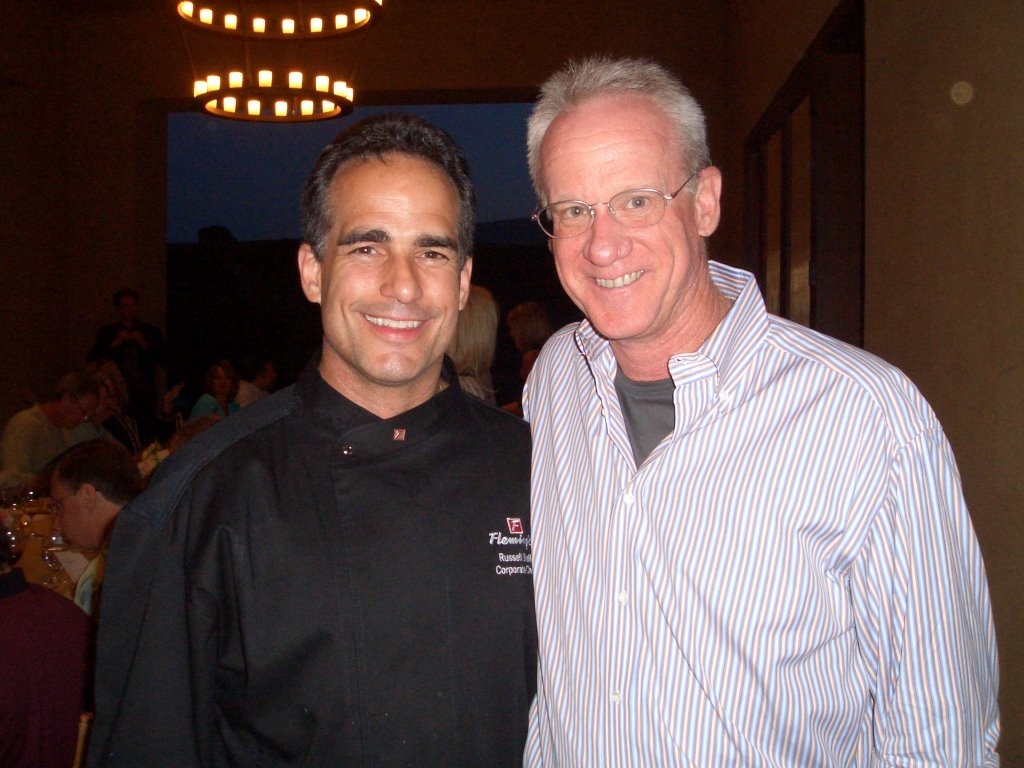
(From top Left); Quintessa's beautiful lake setting; Tyler and Quintessa owner Augistin Huneeus; Chef Russell Skaar greets your Mayor

Sunday, June 18, 2006

Friday's Finale


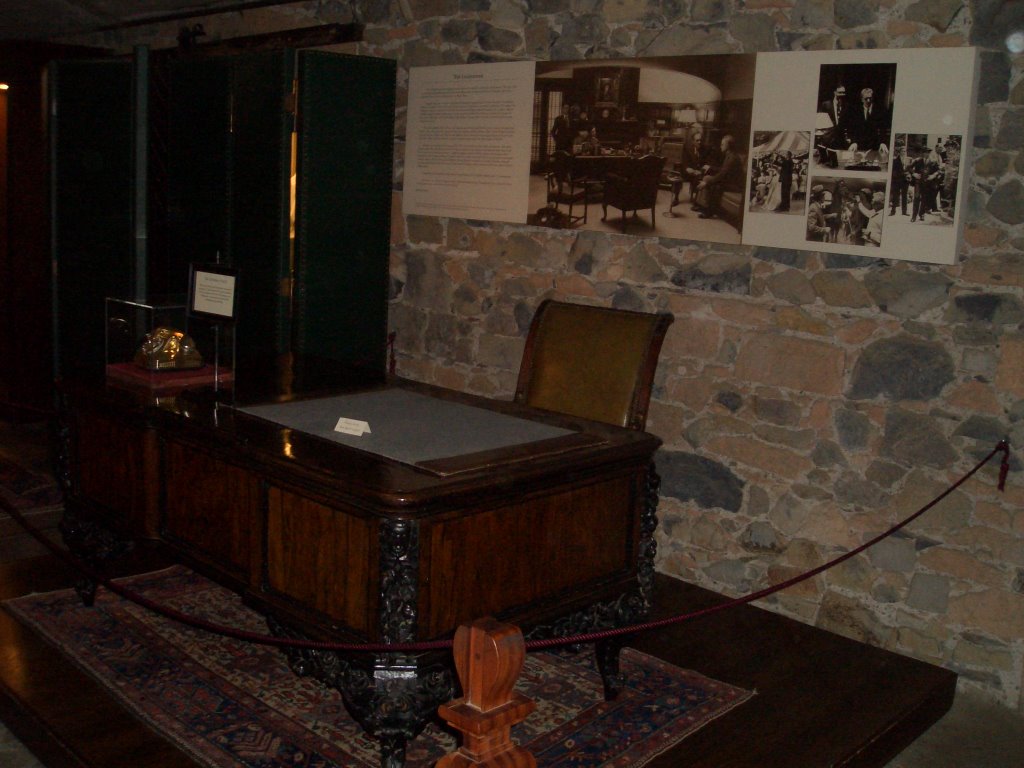
The rest of our Friday was spent tasting the efforts of Cakebread (including lunch) and then on to Francis Ford Coppola's Rubicon, formerly Niebaum-Coppola. Each provided different styles of taste pairings, with a Master Cheese Monger hosting us at Rubicon. Many of the props and Oscars from Coppola's movies were available for viewing at the museum at Rubicon, including the office desk from The Godfather movies(right).
Our evening meal was special. We were treated to a tour and dinner at Quintessa, a 285 acre gem owned by Chilean immigrant Augustin Huneeus and his wife Valeria, who also own Veramonte Winery in Chile. We were led through the vineyards, literally, to an Island in the middle of a lake among the grapes. The island's soul purpose now is entertaining, and we were met by glasses of sparkling wine and a short chat with out hosts. Again the passion for the area was foremost, with Valeria espousing her philosophy as "stewards of the land". She and Augustin had agreed to this dinner engagement no doubt months prior, with the intent of hosting us in their new home. Construction delays being what they are, we enjoyed our dinner with them on the veranda of a house in which they were to sleep for the first time that evening! Literally the sod had been placed that afternoon, and the Air Conditioning units had been wired early that morning, blowing the entire house's circuit breakers. At that point, Augustin told us, he left, returning at the time of the party, not knowing where or whether we would be eating! Our other great coincidence of the evening was that earlier that day, the winery had deemed the 2003 Quintessa ready to release. So we had the added pleasure of enjoying it in it's inaugural appearance. Three wines were served at dinner, all grown on the property. A sauvignon blanc, grown on a half acre plot on the property only for the family's consumption, Faust, a new second label effort available at Fleming's as well as Osaka in Richmond, and the newly released flagship Quintessa. Cooking our dinner while the hosts regaled us with stories of their lives, including the fleeing the Pinochet regime in Chile in the '70s, was Russell Skall, Fleming's Head Chef and Food Director for the chain.
Quintessa takes it's name from the theory that all worldly goods are made from the four elements: earth, fire, air and water. The fifth element, or quintessential, was saved for the consumption of the gods, or at least until now! The flagship wine is made from the top twenty percent of the grapes harvested from Quintessa, and the next thirty percent go into Faust. The remaining harvest is sold off to the local winemakers who need excellent grapes to add to their blends. Quintessa allowed us to purchase a case each of their reds, so perhaps next time you visit the Mayoral Cellar, you can help us compare them.

Friday, June 16, 2006

Food and Wine Pairing Class


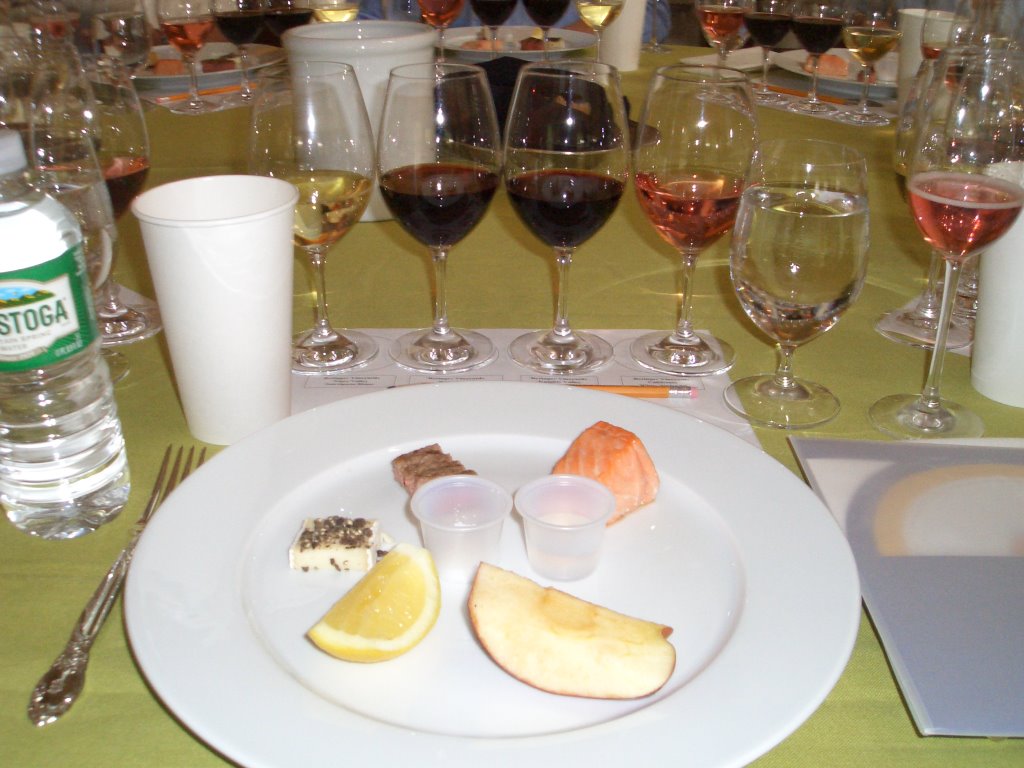
Friday morning of the Napa Experience, I found myself sipping a Sparkling Brut at 9 AM. This was to be our longest day of tasting and swilling wines, and we began at Beringer. Beringer is a large production winery with numerous labels and quality levels. We all know about the Beringer White Zinfandel, the wine made from "no such grape". But they have a number of high end wines, some of which are on the Fleming's Wine List. Their Knight's Valley Cabernet is a wonderful effort if you get a chance. Today our effort was all about pairing wines with food and our lecturer was Jerry Comfort, a former chef and current partner in a Wine Education company that Beringer started.
Jerry's lesson revolved around the theory that food changes wine, wine does not change food. Our simplest lesson tested the effect of sweet and sour on 4 different wines. Armed with an apple slice and a wedge of lemon, we tasted four styles of wine: off dry (the White Zin), crisp white with no oak (sauvignon blanc), light intensity red with little tannin (Pinot Noir) and a strong intensity red with tannin (Cabernet Knights Valley). Each was affected in similar ways by the various outside tastes. After the sweet apple, each wine became more acidic or tart, and the Cabs tannins became more bitter and astringent. Even the White Zin lost all elements of sweetness. The lemon had the opposite affect, neutralizing the acid in the wines. The sweetness became cloying, and the reds became flabby, with no element of structure or mouth feel. We did a similar test with a piece of pepper coated Brie, simulating spicy foods. Typically we recommend wines with some residual sugar to pair with spicy foods (think Gewurtztraminer). The White Zin performed that role in this tasting, and the structure of the spice remained. When we tried the tannic Cabernet however, the oak accentuated the spice, and the taste of the fruit is diminished in the wine. The result is a very hot mouth feel and increased spice. Not a pleasant pairing. However when we seasoned the spicy food with lemon and salt, two typical additions, the resulting reaction helps reduce the spice, and works with the oak to "fix" the wine, and the flavor of the wine returns, and spice is modified. The subsequent pairings involved this theory. Various foods were "seasoned" with moderate levels of acid and salt, and the resulting pairing typically was a winner. The conclusion was that most wines pair with most foods, if the competing elements are neutralized with proper seasoning. This is most effectively shown when we add salt and lime to tequila! The Margarita demonstrates how the acid and salt neutralize the bitterness of the tequila and maximize the sweetness of the Lime and Agave. For homework, let me recommend you try a light white and a heavy red with a piece of Salmon, unseasoned. Watch the food affect the wines, the red especially becoming more oily tasting and overpowering the fish. Then add a bit of lemon and salt to the salmon. The result is a balance of flavors in the wine, and regardless of how big a red or light a white you use, they tend to work.

Monday, June 12, 2006

Patience My Followers


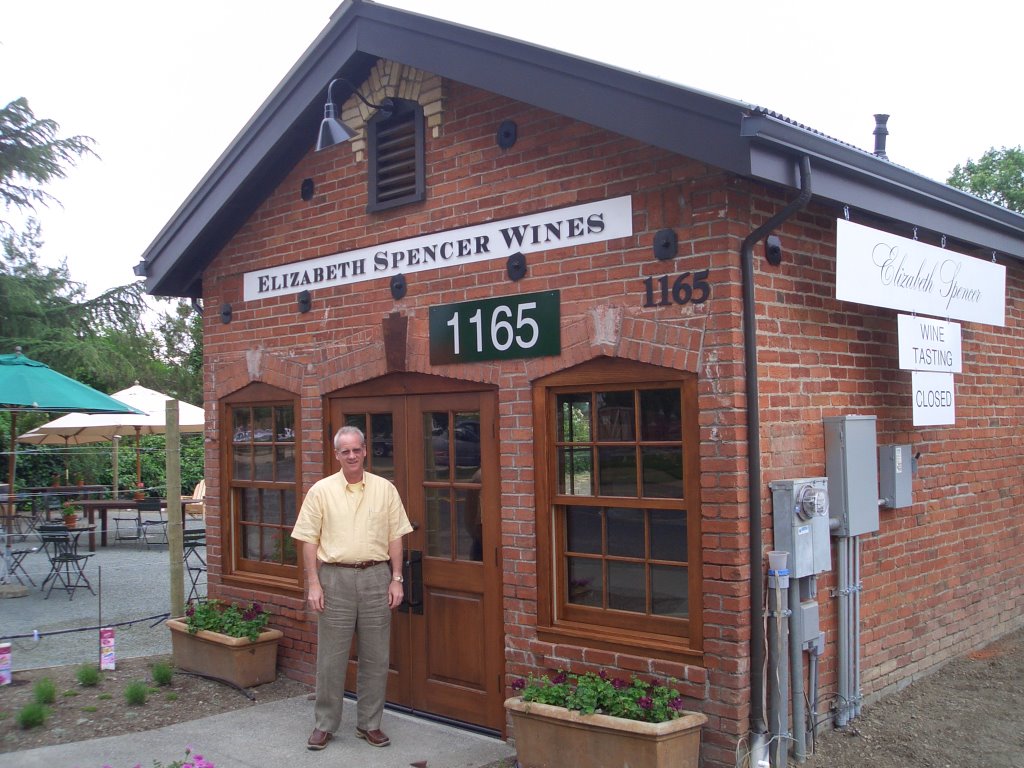
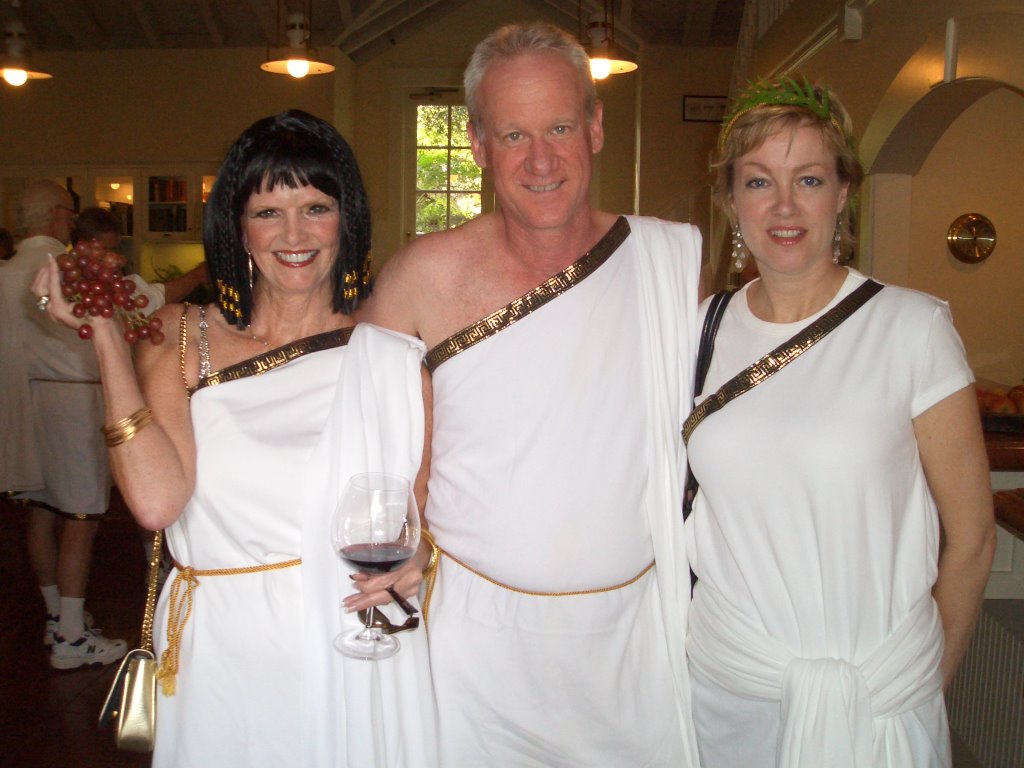
Pictures From Top: I stumble across Elizabeth Spencer; Tasting the 2003 Quintessa, released on the day we arrived; Your Mayor Joins Fleming's Wine Director Marian Jansen op da Haar (right) and Aphrodite for the Toga Party.


As you can imagine, my sensory overload slowed my writing down to a crawl once the wine began to flow and images and food became indelibly linked. I'll begin to transcribe my notes over the next few days, and try to create for you the tapestry of sights and sounds and smells and tastes that I was lucky enough to experience at the hand's of the professional Fleming's crew. Napa is a gem of a place, but more than that, it is a group of passionate, off beat personalities who, for the good of the Napa product, band together and create magic on so many levels. Enjoy a few photos while you patiently wait for the stories in my heart to be decanted, swirled, sipped and savored.

Friday, June 09, 2006

Casa Paul Fleming

After a leisurely day at the Claremont in Berkeley in Oakland, I was whisked away to Napa and the Meadowood Resort. After settling into my room, a private nook about a driver and a pitching wedge away from the main building, I met up with my group for the weekend at a reception in the resort's lobby. It's a bustling group of energetic couples, from a well rounded cross section of the country, from Naples and the DC area all the way to San Jose, a mere 2 hour drive away. We introduced ourselves and met with Marion, the Fleming's Director of Wine for the whole chain. She was a delightful Dutch blond, with an easy charm and quick smile. She asked us to tell of our hometown and favorite wine, and I once again realized how "New World centric" this group was likely to be. But that's to be expected. So we boarded busses and headed off to meet the creator of the Fleming's concept, Paul Fleming and his pretty wife Kelly. A simple but elegant ranch cut into the top of a hill overlooking the Napa River, Kelly designed this beautiful home understanding the biggest threat to the valley: Fire. Stone and wrought iron, there is no exterior maintenance, and nothing to burn in the tragic case of destruction of the area. She said it was her intent to be able to move right back in after any tragedy. She grows five acres of Cabernet, and countless small gardens of organic vegetables and herbs. Paul handled the initial greeting and passed out our first wines. He is a mid fifties boyish looking power player with a passion for value and service. From the moment we shook hands I felt an easy friendship, and enjoyed listening to his methodology of creativity in designing his restaurant visions.
The outside veranda was set up with two long tables set for forty of us, and as we enjoyed the first offering of Rose brut and Sauvignon Blanc, we tasted grilled sardines wrapped in grape leaves, and skewered salmon appetizers. Bisecting the two long dining tables was a water feature, a foot wide and foot deep stream going from the house to the edge of the veranda, where it cascaded down the hill in front of us not dissimilar to some of the Inca aqueducts that BW and I see in Peru. We took bets the rest of the night as to who was going to be stepping into this water hazard, perfectly situated for drunken wine guzzlers to disregard on their way to and from the tables.
The dinner call came with no one's feet wet however and we sat in the setting sun to enjoy the Fleming's hospitality. A Fava bean soup was first served with Etude Pinot Noir fromCarneros. The chef for the evening it turns out used to work at Chez Panisse, and still sells the organic goods from the her own garden to the restaurant. So on successive evenings, I enjoyed fava from her garden prepared in slightly different ways. Small world. This soup was broth based with spring onion and topped with sage flowers and arugula blossoms. Whole fava, not dissimilar to lima beans, brought an earthy depth to the dish, complimenting the wine style.
Our main course was sliced loin of beef with small onions and potatoes with crispy fried green and an almond onion sauce. One of the greens was small sage leaves, fired crisp and salted and dusted with an ever so slight portion of cheese crumbs. I took some notes on this interesting Kelly's 2002 Cabernet was brought out for this course, a three hundred case effort which has smoothed we were told and emerged from a bit of a dumb stage to present quiet fruit with mild tannin, not a rock crusher but more in a Sonoma, cooler climate, style. The Fleming's crew, Paul and Kelly included moved around the two tables, sitting in different places for each course, and encouraging the guests to do the same. Our table, made our move to uproot about half the folks at table two after the steak and before our third course, a salad green and cheese pairing. This brought uproar and chaos, but that was it's intent, and we settled in to meet and greet new faces. One poor girl, Sally, had been thrust between two couples from Southern California who traveled together. Their teasing had gotten her laughing at literally every thing they said, to the crying, belly hurting laugh point. So easy was she to be put off on another tear of laughter, one of the couples wives held up the butter dish and yelled out: "Hey, Sally! Butter!" To which Sally once again was doubled over in pain and tears of mirth.
After the salad, Taylor Fladgate 1988 vintage Port was poured all round, and a strawberry tart brought to continue the similarities between my two California dinners. Darkness had fallen and the air had cooled by this time, and the host couple moved around and between their guests having photos taken, and telling us about his future endeavors. Paul is a consummate restauranteur and business man, a pleasant professional. His home and family show his grace and quality and as we rode back to our hotel, I could not help thinking how nice it will be to return to visit them again.

Thursday, June 08, 2006

Night 1 - The California Swing Begins

Arrived safely in Oakland after a nice day for flying across this great country. A couple hour layover in Dallas yielded a great new Mexican restaurant over in Terminal D, where I slugged down the requisite margarita with my Chimichunga. Cabbed to the Claremont in Berkeley where my room was not quite ready but allowed me the opportunity to try a nice California Sauvignon Blanc on the terrace looking overlooking the Bay toward San Fran and the Golden Gate Bridge.
Dinner was scheduled for 6:30 at Chez Panisse. Grabbed a cab about 6, and wove through the UC - Berkeley Campus, which is lovely and great for people watching. My friends Brad and Roger ran a bit late due to traffic but I took the time to browse through the latest copy of "The Onion", a sarcastic newspaper with some great humor and observation. As I waited in the trendy restaurant, I ordered a glass of rose Bandol from France, dry and crisp with just the right acid to match the olive snack placed on the table. I knew this was not going to be a week of much old world wine, so I was going to try to sneak them in whenever I could. Plus it's always fun to watch people's reaction when you have a pink wine on the table. Little do they know...
When the boys arrived, we got down to business, beginning with Roger's choice, a Littorai Thierot Vineyard Chardonnay. This gem was made in the classic tradition of Burgundy, so came across like on of the great Chablis premier crus. Crisp and well balanced with a little toast and wonderful mineral flavors that the North Coast of California is able to impart, if the winemakers will allow it to emerge. Our food pairings for this wine began with a warm shrimp salad with basil and scallions. Always the hardest wine pairing course because if the vinegar, this salad was light and fresh with that great mouth feel of warm/cool of the shrimp and local greens. A nice balance was provided by the chardonnay in that the vinegar was merely hinted in the dressing.
Next two soups, a fava bean puree and carrot with tarragon cream were combined in one bowl, the colors dividing in half like a more straight line Ying Yang symbol. We all noted how the carrot seemed so fresh that there was none of the cloying sweetness that seems to pervade carrot dishes and the hint of tarragon brought the wines more aromatic nuances out. The fava bean side was, in quoting Roger: "Fava Bean". Kind of bland, but I pulled out what was left of my French Bandol, and VOILA, the slight earthiness of the dry rose was a much better pairing, bringing out the earthy note of the bean. Score one for the old world again.
Brad brought along a '96 Burgess Family Barossa Shiraz, 95 points from Mr. Parker, and we now poured that for the main course. I think we were all concerned about the rock crusher Aussie style conflicting with the next offering, a chicken ballotine and breast with wild mushrooms, spinach and asparagus. However we were all pleasantly amazed with the smooth velvet that poured across our palates. Classic nose of white and black pepper, but none of the astringent tannins which can overwhelm a younger Shiraz. And the gamey free range flavors of the chicken stepped up the flavor, and helping to match the rural notes of the mushrooms and the earthiness evident in the wine.
Not ready to rush to dessert, we ordered an interim syrah for a compare and contrast exercise. They allowed me one more shot at the old world, and I opted for a half bottle Yann Chave Crozes Hermitage. What a powerful counternote to the Shiraz. Warm and earthy with the nuances I love in French wines, we all enjoyed this classic maker's offering, where the fruit and oakiness balanced and made for a mouth full of heaven.
I was also allowed to pair the dessert, a strawberry-almond tartlet, with a sweet final sip. The "almond" in the description made my eyes cast to a Hungarian Tokaji, a nutty sweet wine measured in quality and sweetness by its level of "puttonyos", a one to six scale. The Oremus Five Puttonyos matched up with the dessert and was a new wine taste to my two friends. Those who know me well, recall the influences that a good friend of Hungarian descent had on my food and wine enjoyment in stories past, so this was a predictable choice. Now all we needed was the Zwack Unicum to use as a digestif!
Good friends, old or new, and good food in a festive setting always yield good stories.
Chez Panisse is a stellar example of what great chefs do with fresh, organic local ingredients, in this case, relationships cultivated by Chef Alice Waters since this restaurant opened in 1971. It's a "Must Visit" in the Bay area, not because of showy hugeness so popular today, but for it's value (dinner was $65 prix fixe), it's diminutive size and tasteful ambiance, and above all it's talented staff.

More tomorrow as I join the Fleming's crowd for our Napa Experience!
Monday, June 05, 2006

Sunday Wine Tasting June 4th

Our Sunday Wine Tasting Series kicked off last night with a blend of old and new, both in wines, and in wine cellar visitors. These are informal wine and cheese quaffs in which I pick some cellar gems, attempt to pair them with some neat cheeses, and lead a discussion on the relative merits of both the wines and the pairings. Lasting about an hour and a half, I always describe these as "Come enjoy my hospitality from 5:30 until 7:00, and then get the hell out of my house".

It's always fun to gather an eclectic crowd and last night was no exception. Three lovely ladies from a women's wine group who have become great fans of the cellar and good friends were the first to sign up. An old workplace chum who has moved on to another job joined in as well. And Barbara, who starred in the Spanish tasting notes from the Bin22 event, and the photo therefrom, brought the boyfriend of one of the other ladies from that evening. We were rounded out with my chemist friend Chris, who added a scientific side to the discussions. We started with a white, a small production Marsanne/Ugni Blanc/Grenache Gris blend from Australia. All combined, they produced a pleasantly acidic lightly fruited warm weather quaff not dissimilar from Sauvignon Blanc. More lemon than grapefruit, and some of us picked out the "bitter almond" on the nose that our downloaded tasting notes told us to look for. The cheeses (a soft Camembert, my favorite Petit Basque, and an Aged Gouda) mellowed the acid (always look for this to happen) but also clouded any complexity that the wine had. For the most part, it was seen as a stand-alone summer sipper, before moving on to more exciting offerings.

We moved to the old world next with a value priced 1998 Barolo from Lodali. Light color, edged in brick, reminiscent of Pinot Noir, with all the earthy notes that denote Barolo, this wine also showed it's acid and abundance of dark red fruits and blackberry. Slight toast and tobacco, it paired nicely with our cheeses and grapes, a characteristic generally expected form the old world style. This wine opened dramatically with three hours of decanting.

Next we were blessed by the magnanimous BW who allowed us to open one of her Peruvian wines, a 2002 Tannat-based Tacama. This wine had become flawed, but not so much that we could put our finger on it. Only after arguing it's relative merits and idiosyncrasies, did Bobbie come in and taste it and pronounce it shot. We opened another bottle from a different vintage, and got all the appropriate red fruits and color of the varietal that we expected. Not expensive, it is typical of the efforts from central South America. Worth a try for the education of palate, look for locally from Uruguay.

We finished the evening in Bordeaux, as those of you who know me might expect. Chateau Cantenac Brown 1998 is a Margaux based wine, blending the typical Cab/Merlot/ Cab Franc. Earthy and solid, the nose foretold of it's style. Deep aromas of the dark fruits and bell pepper. The taste was typical of the region: Dark fruit, wonderful earth moderate tannins that faded after decanting. The cheeses and this wine are made for each other, and the relative lower acid level in the wine allowed more of the flavor of the cheese to shine. Acid tends to blend with the fats in cheeses to mute each other out, sometimes necessary, but sometimes to the detriment of both.

We went back and tasted through the wines again and I always notice in that review that some earlier also-rans rise up and become favorites. Always keep a little bit of the wines tasted early on so that they may get the benefit of your softened palate later. The change is amazing. All in all, a successful effort and interesting discussion among new and old friends. And they were all "the hell out of my house" by 7!

Sunday, May 28, 2006

Fleming's Napa Wine Experience


Next week I head out to Napa for a long weekend sponsored by Fleming's for their Magnum Club Members. As the only Richmonder to jump on this opportunity, I will be alongside 29 other good customers from all around the country where Fleming's has locations. I arrive a day early to meet up with friends from San Francisco and join them for dinner in Berkeley at Chez Panisse, considered one of the Bay areas finest restaurants. The host resort for the weekend is Meadowood, pictured above. A full service spa and resort located in the heart of Napa Valley, this awsome site has played host to the burgeoning wine industry in Napa since 1964. For the last twenty five years, it has been the preeminent destination for discerning travelers visiting the region. Thursday evening begins the Napa Wine Experience with dinner at Paul Fleming's home in Calistoga, overlooking the Russian River. The highlight of the evening is the unveiling of his wife Kelly's first release of Cabernet Sauvignon.
Friday is a grueling day of tasting and touring, beginning at Beringer, where we have a tour and wine and food pairing class. Cakebread hosts our luncheon, and a class on blending wine from barrels with Dennis Cakebread, the owner. Our afternoon is a private tour and tasting at Francis Ford Coppola's historic Niebaum-Coppola winery. Friday evening, we are off to Quintessa, where we enjoy a reception and four course dinner prepared by the Fleming's Executive Chef Russel Skall at the residence constructed on the "Island of Quintessa".
Saturday we are off to a morning tour at Honig winery with the owner and a discussion of organic techniques in winemaking. Then across the vineyard we will walk to Frog's Leap for our tour and discuss the "biodynamic" farming techniques, followed by lunch the their "Ghost Winery". An afternoon off is well deserved and I plan to take time out for a Grape Seed Body rub, and facial. If I wake up, I rejoin the crew for our theme dinner and toga party at the Franciscan Oakville Estate.
Sunday morning is a champagne brunch at Gloria Ferrar and departure back to reality and my cross country flight home. I'll take lots of photos, and post them, and I'll be sure to keep my notes safe so that I can write the story of the trip. Looking forward to sharing this with all of you!